
Beauty and Wellness Business QuickBooks CleanupClean up the books.
We clean up the books so a haircut, a bottle, and a tip stop sharing one pile, then Steven Palmieri, a Tax CFO, reconciles the month and prepares the return.
Start the books cleanup.
Tell us what the books still mix. Shop amounts stay off this note until a letter names the work.

You will be talking to the Steven Palmieri practice.
What a quiet drawer lets a Tax CFO decide.
We keep the books, reconcile the month, and prepare the return.
The mixed ticket.
A haircut, a bottle, and a tip can share one screen and still be three different events.
Click to see the books ›Tap to see the books ›
One item.
The products list can hold a service and a retail item. One item that tries to be both stays wrong.
Click to see the items ›Tap to see the items ›
The shelf.
A bottle that leaves in a bag is a sale. A bottle used during the service is a supply.
Click to see the shelf ›Tap to see the shelf ›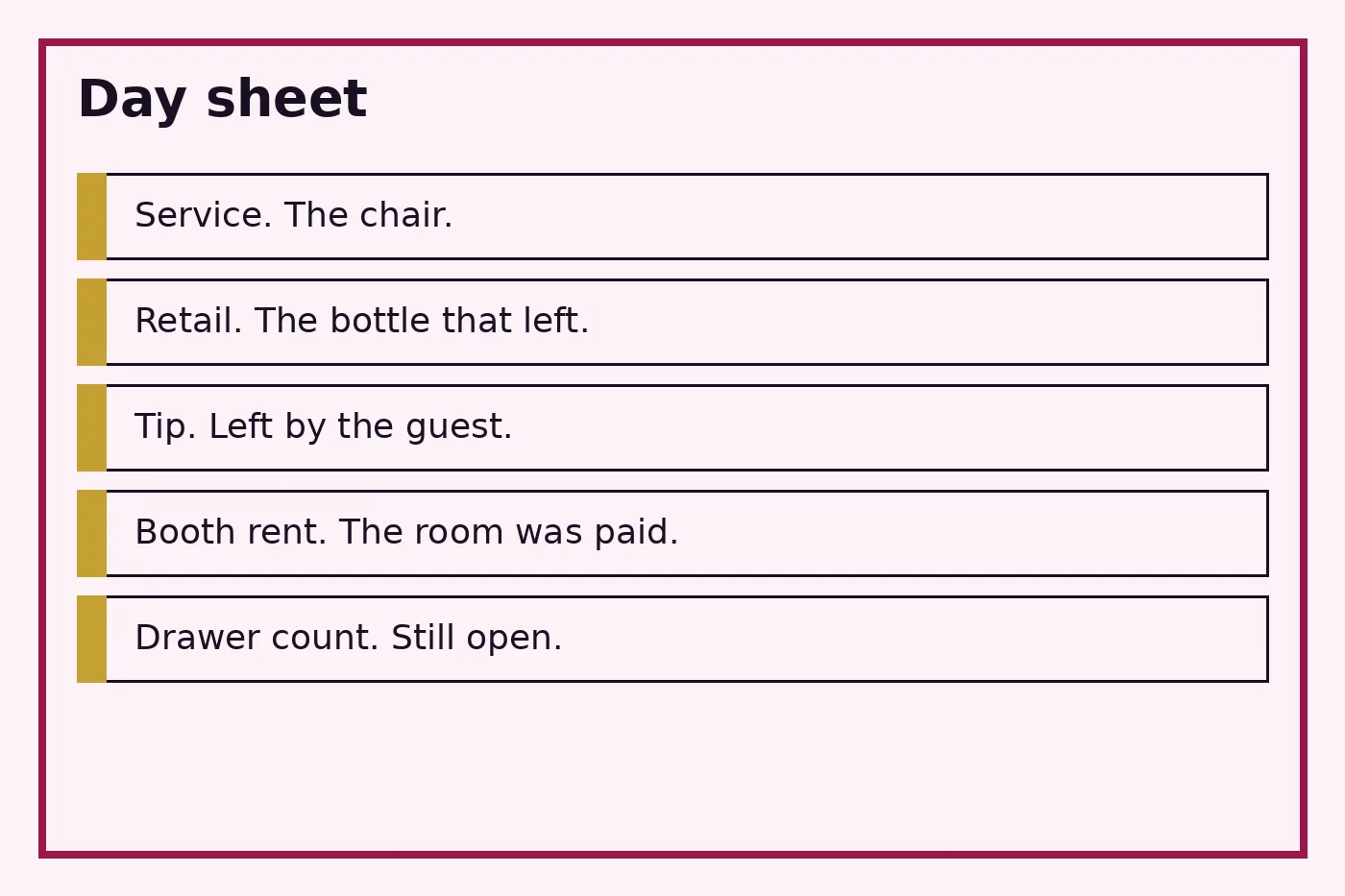
Tips and the day.
Charged tips, cash tips, and the card deposit are three numbers. The day sheet is where they meet.
Click to see that day ›Tap to see that day ›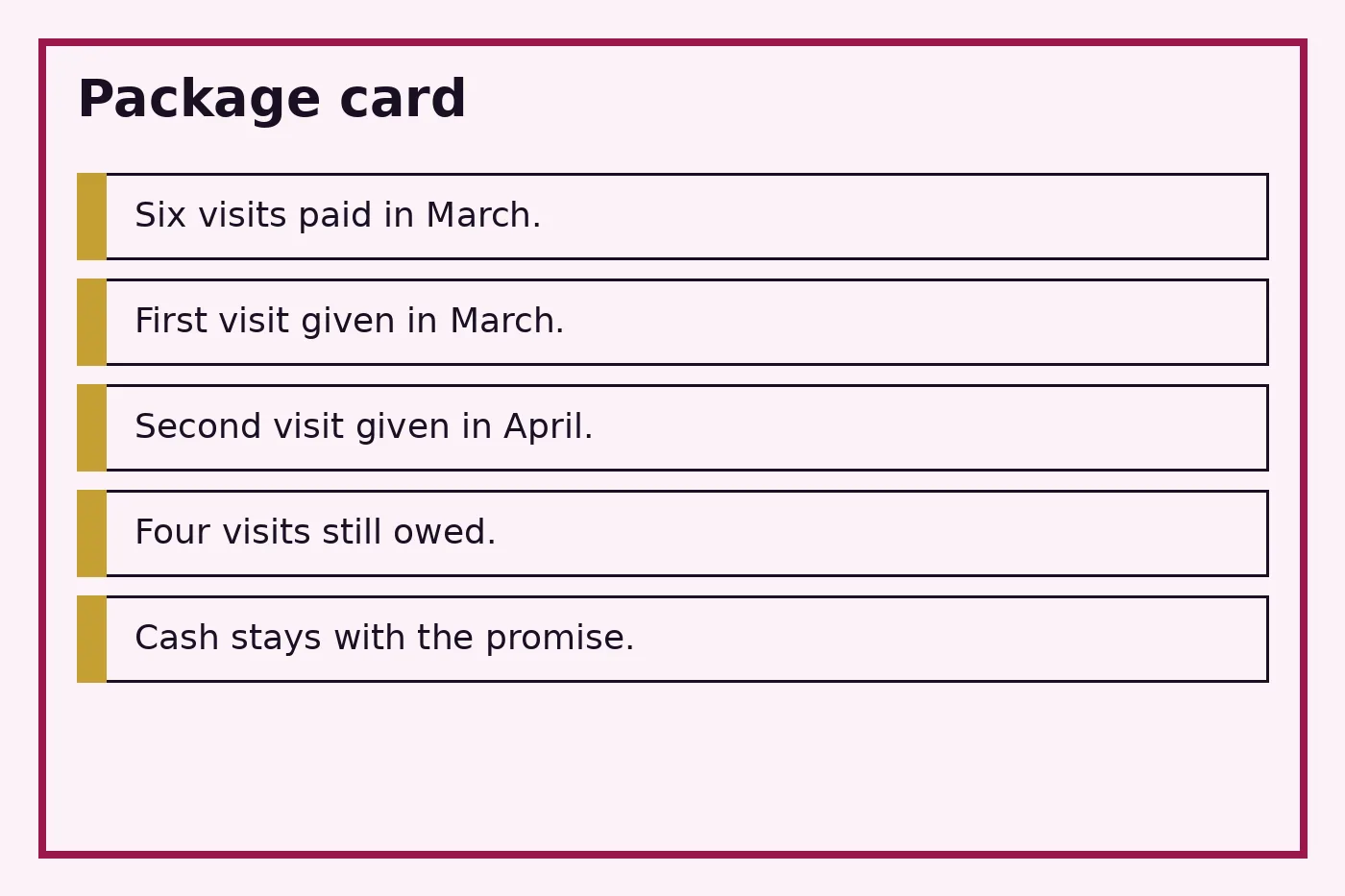
Packages.
Money collected today for a facial next month is not income yet. The shop still owes the visit.
Click to see a package ›Tap to see a package ›
Booth and wages.
Rent the room receives is not the same money as pay a stylist takes home.
Click to see booth rent ›Tap to see booth rent ›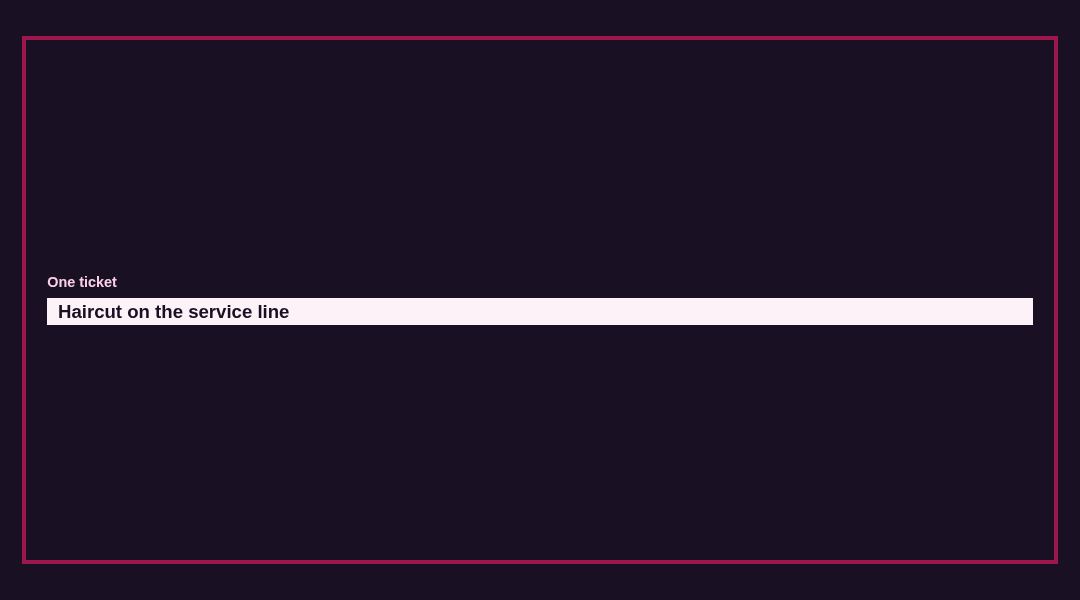
Six lines on one ticket.
Five lines already have a home in the books. The dashed box is the item that still tries to ring a haircut and a bottle at once.
Service itemRings the chairHere
The haircut, the facial, or the hour in the room has its own item. The state return can leave that line alone when the item says the sale is a service.
Retail itemRings the bottleHere
A bottle that leaves in a bag is a product sale. It needs an item of its own so the taxable line is only the bottle.
Gift cardStill owedHere
Money taken for a card today is not income yet. It sits as something the shop still owes until the card is used.
Tips payableThe guest left itHere
A tip is not the shop's sale. Charged tips still have to meet the day sheet and the payroll setup.
Booth rent inThe room was paidHere
When a stylist pays the shop for the chair, that money is rent received. Wages stay on a different line, and so does the haircut.
Blended buttonStill bothMissing
This dashed box is the item that still tries to be both. One item that rings a haircut and a bottle together makes the sales line guess. Split it or retire it.
Plan the year
Tell us what the year should change. A reply names whether the books, the statements, or the return moves first.
Plan the year.
Tell us what the year should change. Shop amounts stay off this note until a letter names the work.
You will be talking to the Steven Palmieri practice.
A deposit that swallowed the day
The card processor often sends one lump. The day had a haircut, a bottle, a tip, and sometimes rent from a stylist who paid for the chair. A bank rule that drops the whole lump into one income account hides the split. We turn that rule off for the shop deposit and let the day sheet name the parts.
Tickets can also sit in the bin the software uses before a deposit is grouped. The bank already shows the money. The bin still shows the tickets. Until those two meet, the month is not quiet, and we do not draft the return from it.
What a quiet shop month holds
Service income is the chair and the room. Product income is what left in a bag. A gift card and a package sit as amounts still owed. Tips the guest left are not the shop's sale, even when the card carried them. Booth rent received is money a stylist paid the room, and wages stay on their own line.
A question account that caught a messy line during the month should be empty by the close, or still marked open. We would rather leave a line open than invent a name for it. The statements the owner reads come only after that choice is made.
Payroll is set up, then the provider runs it
If the shop pays people, we set up the wage, the tip path, and the deposit rhythm with the provider the shop already uses. We do not run Friday. A service charge the shop requires is wages. A tip the guest chooses is reported to the shop, and the payroll setup has to have a place for it.
Tip reporting to an employer follows the federal calendar, whichever state the chair is in. An employee who receives twenty dollars or more in tips in a month reports them to the employer by the tenth of the next month. Charged tips the shop pays out count. The day sheet is the record that makes that report possible.
The login stays yours
We can work from a shared file and a video call. The password stays off the form and off the first note. If an engagement starts, the letter says how the file is opened. Before both sides sign, the pages stay general and your figures stay in your own file.
A hypothetical ticket on the shape page leaves the amounts blank until a letter is signed. The first real numbers are the ones from your day sheet, and we do not invent a balance to fill the drawing.
What the first month includes
Payroll setup is the wage, the tip path, and the day a deposit should land, done with the provider the shop already runs. That provider still runs payday. Statements wait for a month whose day sheet and bank agree. The return waits for those statements.
The item that still does two jobs is the thing to name first. A reply says whether the service, the bottle, the tip, or the package is the line that has to move. The numbers themselves can wait until a letter is signed.
The first month also names which sales item is a service and which is a product, then reconciles the card deposit to the bank. Steven Palmieri, a Tax CFO, reads that month before anyone drafts the return. Payroll setup stays with the provider the shop already runs, and the statements wait until the day sheet and the bank describe the same Saturday. Splitting yesterday's ticket once the drawer has closed is the bookkeeping step. The Tax CFO decides what the shop should do with a true month. That decision covers whether the room earns more as booth rent or as a stylist's wage, whether packages are worth the cash they bring in early, and when the second chair pays for itself.
A year the file can stand behind
Old tickets are the messy part. One item used to ring a cut and a bottle, and the bank rule copied that blur into a single income pile. Where the tickets still exist, the lines get corrected. Where they do not, the old period gets an honest label and the blend stops on the next ticket. We would rather show a limit than dress up a guess.
A present month is quiet only when three records match. The day sheet, the card batch, and the bank have to tell one story. The shelf count has to match what left in a bag. Cards and packages still unused have to sit as something the shop owes. Statements come from that month. They do not come from a month that can still change under them.
The year ahead lives in the item list. Service, retail, a gift card, a tip, and rent for a chair each need a home before the busy season, not after the return is already drafted. A chair or a dryer placed in service can be read on Form 4562. For a tax year that begins in 2025 the instructions name a ceiling of two million five hundred thousand dollars, and the ceiling starts to fall after four million dollars of property placed in service. The instructions draw that ceiling. A shop's own total is what the return uses, and we leave the sample line blank until the letter names the property.
A notice about tips, a payroll deposit, or a receipt is the same work in every state. The ticket, the batch, and a month that has stopped moving are what the reconciliation needs.
Where the three home pictures come from
The stylist drying a client's hair is a photograph by OrnaW, Pixabay Content License, photo 4019672.
The barber shaving a client is a photograph by jackmac34, Pixabay Content License, photo 3173437.
The hands setting a client's hair are a photograph by Engin_Akyurt, Pixabay Content License, photo 4556496.
The day sheet, the package card, and the blank card keypad are drawn for this page. No guest name and no street address are on them.