Beauty and Wellness Business QuickBooks CleanupCollected now, earned later.
A facial paid in March and given in April is still inside Saturday's deposit as money the shop owes. Cash in the drawer feels like a good day. If the facial is next month, the income is next month too.
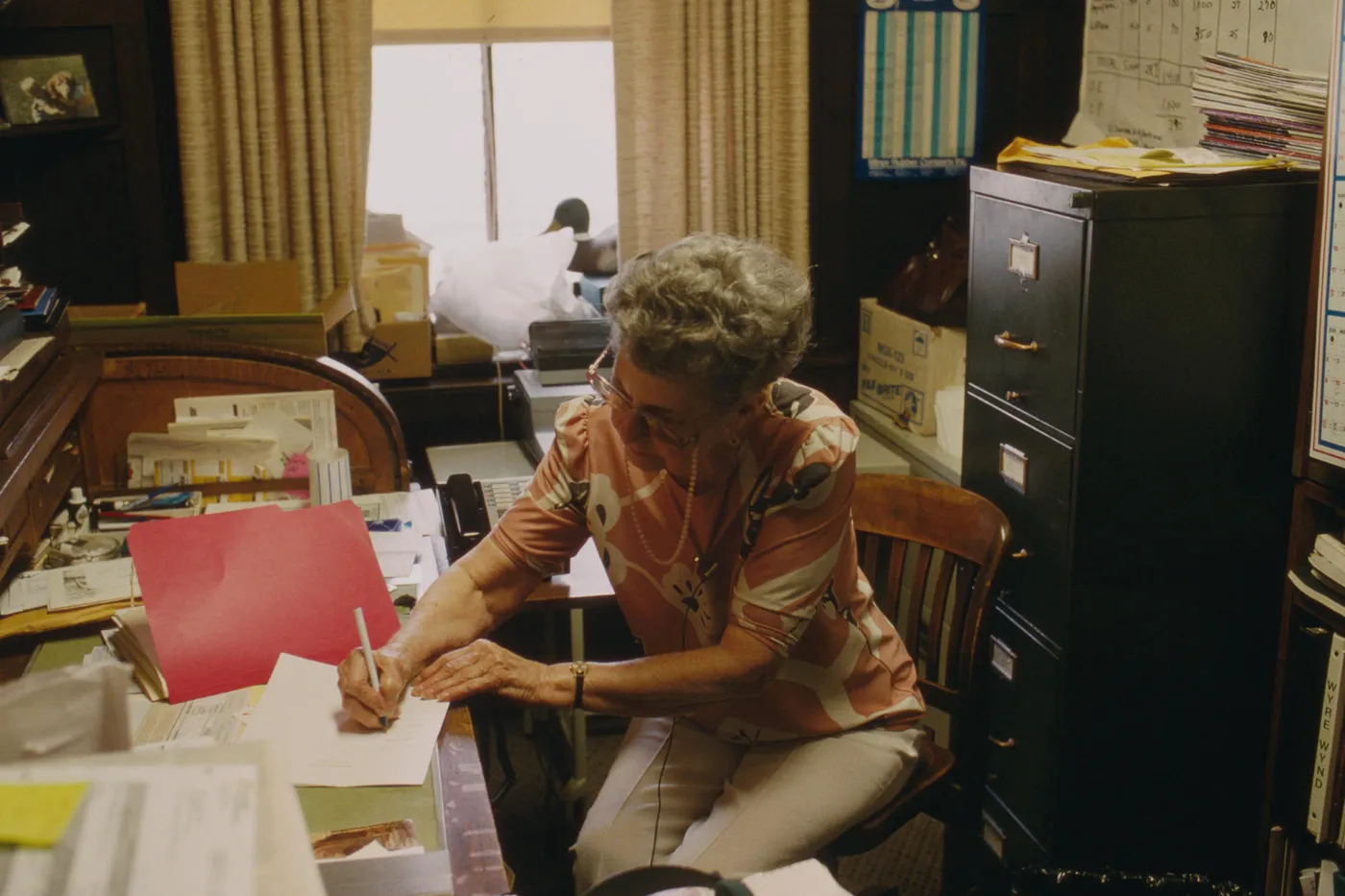
Paperwork photograph, Library of Congress item afcwip003474. The item record notes no known U.S. copyright.
A card is a promise.
A gift card takes money today and promises a service or a bottle later. Until that promise is kept, the money is something the shop owes. Booking it as service income, or as product income, on the sale date makes this month look wonderful and the month of the visit look empty. It also overstates what the shop has earned if a pile of cards is still outstanding.
A package of six facials works the same way. The guest paid for six. One happens today. Five are still owed. Income today is one sixth of the package, or whatever portion the visit represents, and the rest stays in the liability. A membership billed every month is the same idea on a timer. The bill is not the visit. The visit is the visit.
We build two moments into the items. The sale moment feeds the liability. The visit moment relieves the liability and feeds income. Shops that press the facial button on both days double the income. Shops that press it only on the sale day never show the work in the month it happened. Either pattern makes a year hard to explain.
One package across March and April.
In March a guest pays for six facials and takes the first one that same afternoon. The day sheet names that one visit as given. Five visits stay as money the shop still owes, and the March cash sits with that promise. In April the guest takes the second facial. April records income for that second visit alone, and four visits remain owed. The March cash is not entered as income a second time. A membership billed every month follows the same pair of moments, the bill and the visit, and the bill is not the visit.
Breakage is a decision, not a mood.
Some cards are never used. Whether the shop may take that leftover into income, and when, depends on the terms printed on the card and on the law that applies to those terms. We do not sweep old cards into income because December feels thin. We list the cards still outstanding, read the terms, and only then talk about what can move. A breakage percent invented to plump December is left out of the books.
Refunds of packages go back against the liability, not against a random expense. If part of the package was already delivered, that part already became income and the refund of that part is a reduction of income. The undelivered part never was income. Mixing them creates a month that cannot be explained to the owner who lived it.
Why this shows up at a bank.
A shop with a lot of packages can look rich in the bank and ordinary on a true income statement. That is healthy, if the liability is on the books. It looks like missing money if the packages were booked as income and then the visits are delivered with no new cash. The owner thinks the good months vanished. They were borrowed from the future, and the future came due.
The room can sit upstairs or across town. Either way the unpaid visit stays on the liability until the guest is in the chair, and April records only the visit that happened.
The blank rows for those liabilities are on the shape page.
We keep the open card list next to the liability row so a thin December cannot invent a number the printed terms do not allow.
Say what is still owed.
Name the promise. The balance can wait.

You will be talking to the Steven Palmieri practice.